


Understanding the Traditions of the Walima Reception
A Pakistani wedding exemplifies the richness and beauty of South Asian culture. The traditional rituals of the Baraat are followed by the emotional moment when the bride’s family sends her off with the groom’s family. This departure ceremony is known as the Rukhsati.
When the bride walks towards the departure vehicle, the Quran is traditionally held above her head as a symbol of the Almighty’s blessing. Upon moving from her paternal home to the groom’s residence, the couple begins their new life together. The wedding series effectively comes to a close with the Rukhsati ritual.

Walima Reception Food in Pakistani Wedding
Walima – The Reception Ceremony
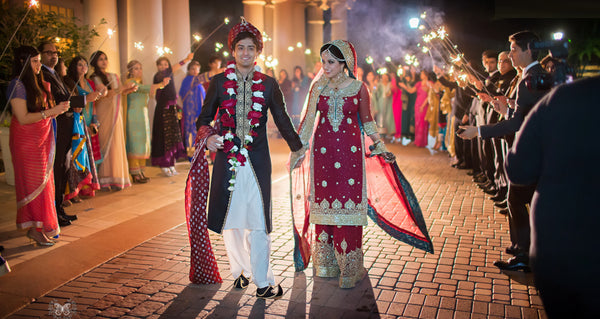
Following the wedding, the groom’s family organizes a formal event to celebrate the union, known as the Walima. Inviting friends and extended family from both sides is a foundational tradition. On this occasion, the bride and groom make their first public appearance as a married couple. From traditional floral decor and live music to a shared feast of regional cuisine, the Walima celebration marks the beginning of a new chapter in the lives of the newlyweds.

Bride at Walima Reception of Pakistani Wedding
Dress up elegantly for the Walima
As this is the couple's first public appearance together, the attire is selected to provide a sophisticated and lasting impression. The aesthetic for this occasion is typically elegant and refined. The bride traditionally wears a detailed lehenga and heritage jewelry for the event. On the other hand, the groom often selects a Sherwani or a formal suit for a dapper appearance.
Attendees of the Walima ceremony also maintain a sophisticated appearance in accordance with the formality of the event. Men often wear tuxedos or Western formal suits, while women select refined authentic Pakistani heritage styles such as sharara ensembles and traditional flared silhouettes.
← Back to Blogs
Also in Pakistani Weddings


FABRICOZ HELP


